Natural beekeeping in the Skagit Valley since 2011
Honey from twenty-six hives in the Skagit Valley.
Brad Raspet keeps 26 colonies on seven host properties between the Skagit and the Samish. Nothing goes into the hives that would harm the bees, the honey is never heated, and it is gently strained rather than filtered — so what the bees made is what ends up in the jar.
Saturdays at the Mount Vernon Farmers Market · Free swarm capture across Skagit County
- 26 colonieskept on seven host properties across the Skagit River Valley
- Since 2011the first four placed along the Skagit and Samish rivers that April
- Nothing addedno chemicals or antibiotics in the hives, and the honey is never heated
- No chargehoney bee swarms captured and rehomed anywhere in Skagit County
What we make
Honey, and what else comes out of a beehive
All of it comes off the same 26 colonies. Ask at the market stall and Brad will tell you which month a jar came from and what was flowering at the time.
Raw honey, three ways
Never heated above room temperature and gently strained rather than filtered, so the pollen and the flavour stay in the jar. Sold in 16 oz glass.
- Wildflower — changes month to month with the bloom
- Blackberry — midsummer, and the one people come back for
- Maple flower — early, from the big-leaf maple
- 16 oz glass jars, $12.50
Handmade soap
Cold-process soap made in small batches with honey and beeswax from these hives, then cured and cut by hand. No two bars come out quite the same.
- Honey and beeswax from the Bingaling hives
- Avocado, coconut, palm, olive, rice bran and sunflower oils
- Rolled oats or fine cornmeal as a gentle exfoliant
- Full-size bars and smaller guest soaps
Lip balm and beeswax candles
The beeswax the bees build the comb from does not go to waste. It becomes lip balm and poured candles that smell of the hive rather than of fragrance oil.
- Beeswax, coconut, avocado, cocoa butter, sunflower and castor oils, and honey
- 10 gram pots
- Poured beeswax candles
Free swarm capture
A swarm hanging in your tree is not an attack — it is a colony looking for a house, and it is at its most docile. Please do not spray it. Call and Brad will come and take them, gently, at no charge.
- Anywhere in Skagit County
- No charge, and nothing to sign
- They are rehomed here in the county, not destroyed
Talks, classes and hive tours
Brad has been taking a frame and a smoker into Skagit County classrooms and community groups for years — what is inside a hive, who does what in it, and where honey actually comes from.
- School classrooms and community groups
- Beekeeping classes
- Ask about visiting the apiary
Hive to jar
What “raw” is actually doing here
Four steps, and the honey is only touched in two of them. That is the whole method.
The bees forage
The colonies sit on seven host properties around the valley, so what comes back is whatever is flowering within a mile or two of them — big-leaf maple early, a shifting mix of wildflowers through spring and summer, blackberry in the heat of it.
Nothing goes into the hives
No chemicals, no antibiotics, nothing that has no business being in a beehive. It is slower and it costs more colonies in a bad year. It is also the only reason the word on the label means anything.
Uncapped, spun, gently strained
The wax cappings come off, the frames are spun in an extractor, and the honey goes through a mesh strainer to take the wax out. It is never heated above room temperature and it is never filtered, so the pollen it was carrying is still in it.
Into 16 oz glass, the same season
Bottled and labelled by variety and sold where it was made. The wildflower has historically run out before the year does, which is the honest answer to why there is sometimes none on the table.
About
Brad Raspet, beekeeper
I started keeping bees in April of 2011, with four colonies placed along the Skagit and Samish rivers. The next year I retired after 29 years with Renton Fire and went at it with both feet, starting sixteen more. There are 26 colonies now, on seven host properties around the Skagit River Valley.
I follow natural beekeeping methods, which mostly means what I do not do. Nothing goes into these hives that could hurt the bees or the ground they are standing on. The honey is not heated, and it is gently strained rather than filtered, so what you open is a premium natural raw honey with the subtle flavours, the phytonutrients and the antioxidants that ought to be in honey still in it.
The wildflower changes a little every month, because the flowers do. That is not a flaw to be blended out — it is the valley telling you what was in bloom. A little of the same honey and beeswax goes into the soap and the lip balm.
And if you find a swarm hanging in a tree, please do not spray it. Call me. I will come and get them and find them a home here in the county, and it will not cost you anything.
— Brad Raspet, Journeyman Beekeeper
- Journeyman Beekeeper
- Skagit Valley Beekeepers Association
- Washington State Beekeepers Association
- Washington Master Beekeepers Organization
Photos
The hives, the jars and the Saturday table
Brad takes these himself, mostly one-handed with a smoker in the other. Ask at the stall and he will show you a great many more.
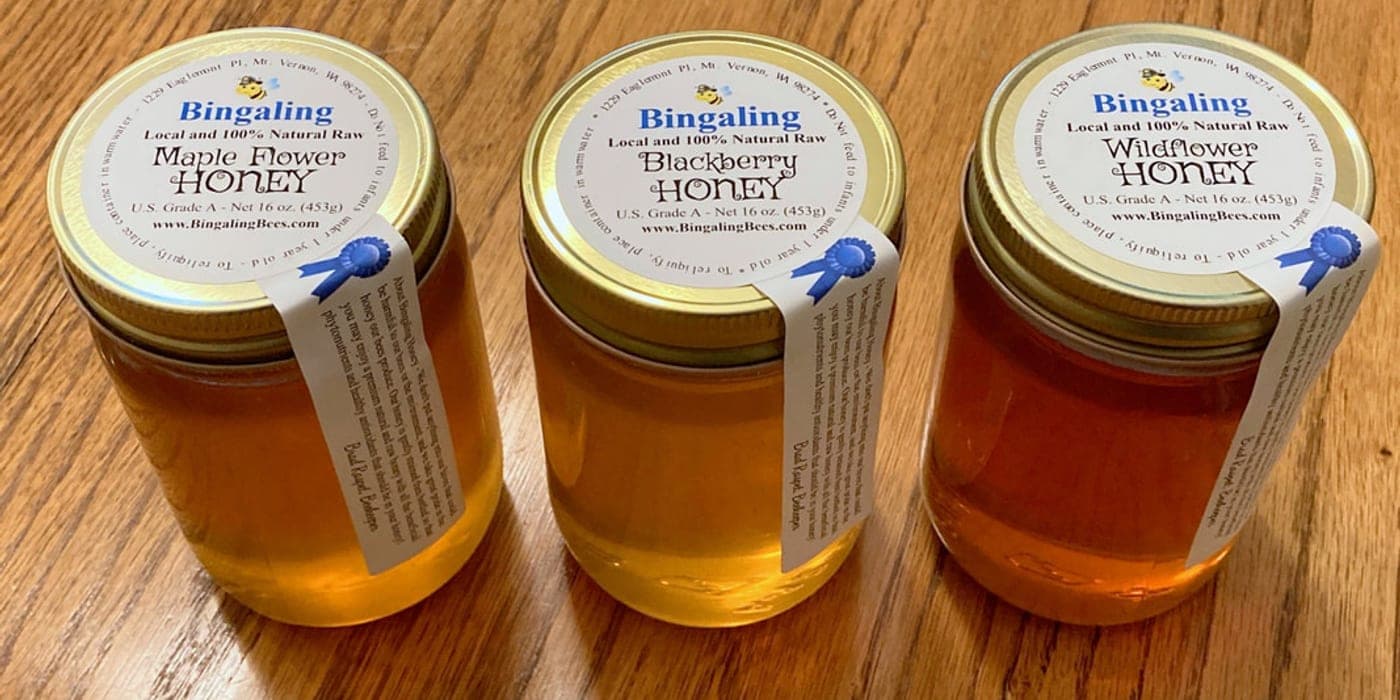
Maple flower, blackberry and wildflower, in 16 oz glass 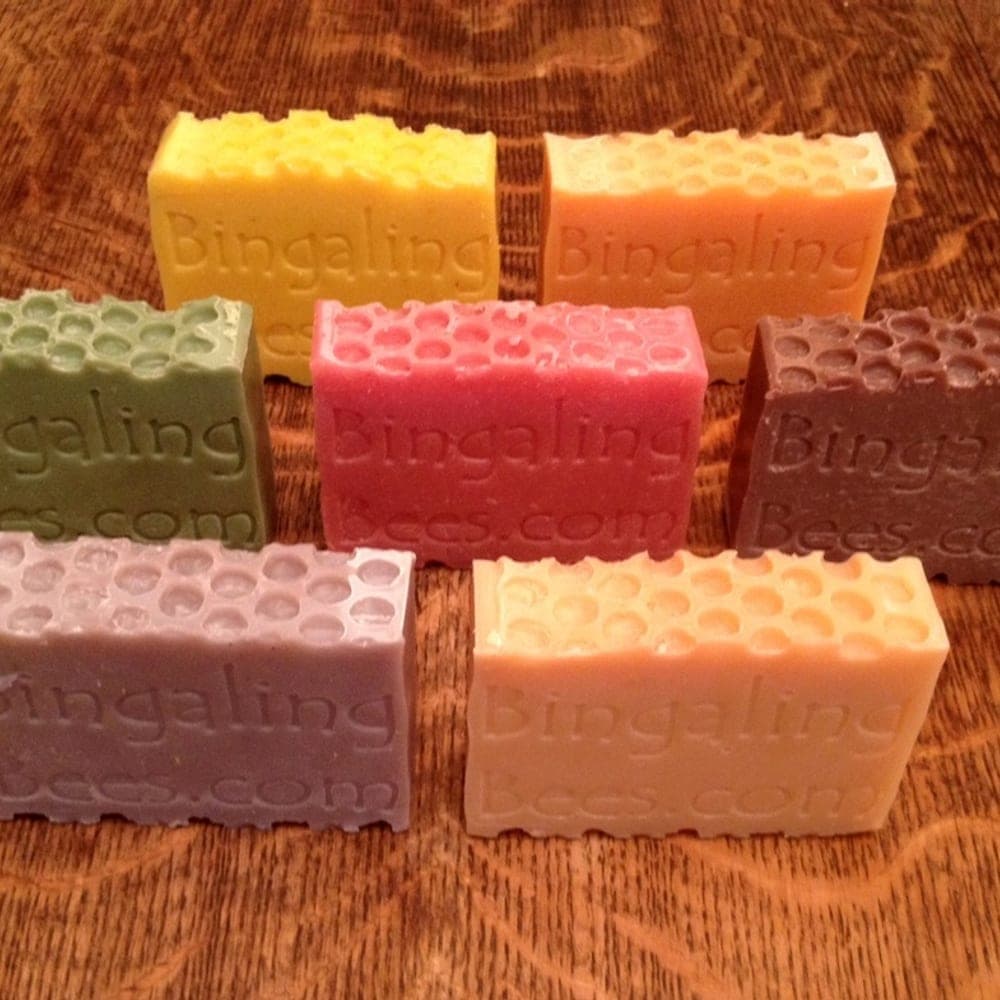
Cold-process soap, cured and cut by hand 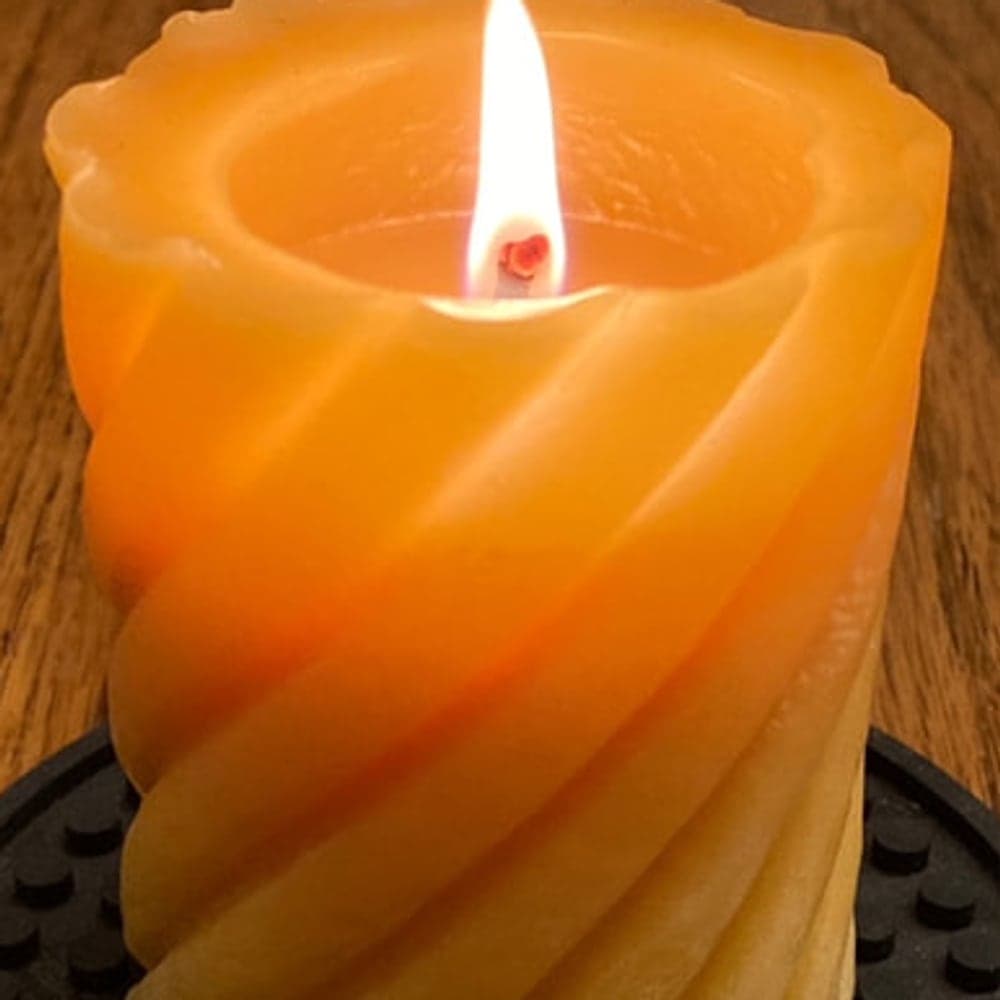
A poured beeswax candle, burning down 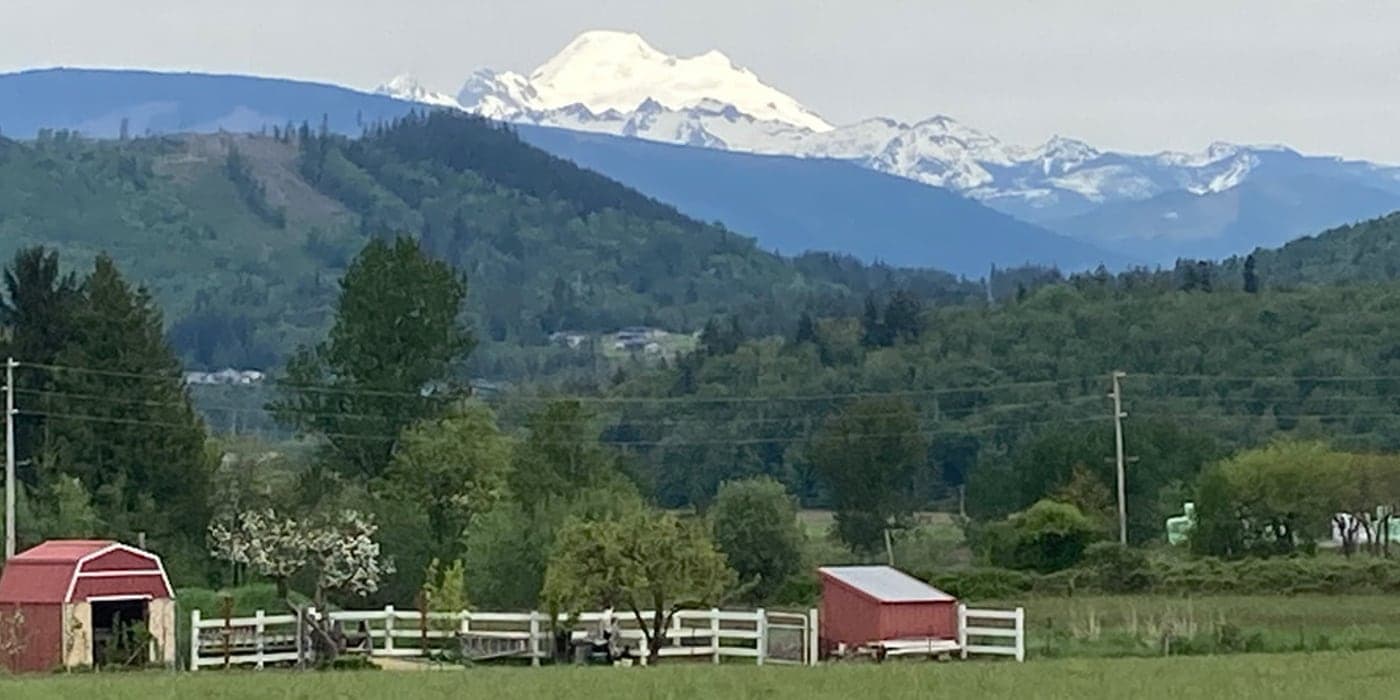
The valley the colonies are scattered across 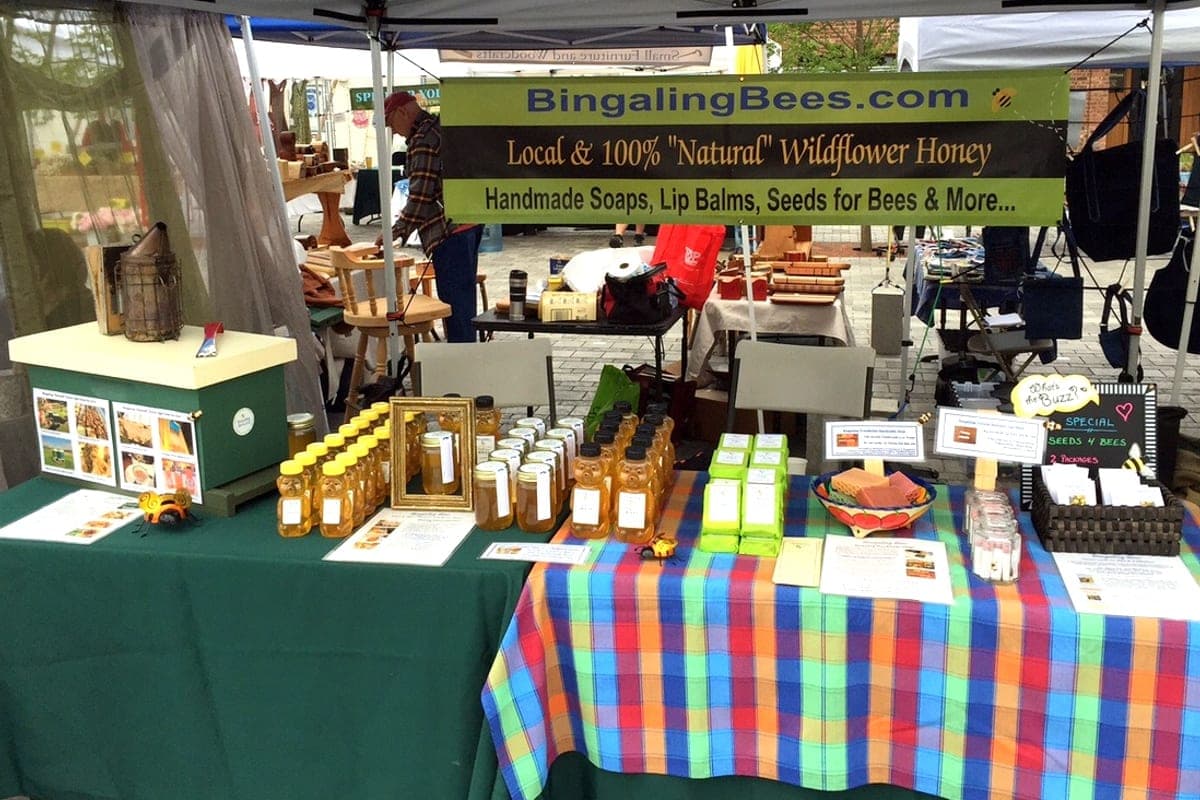
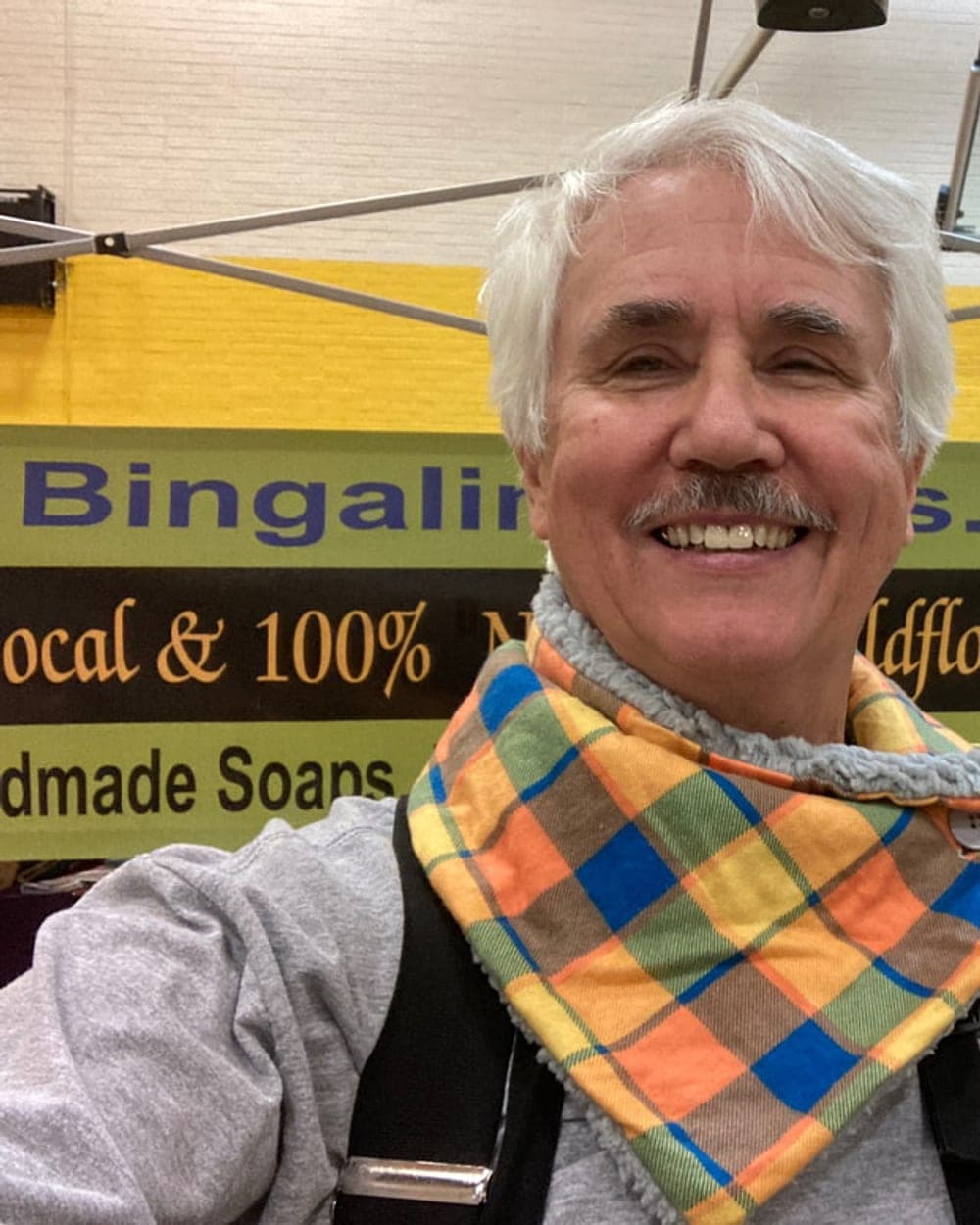
The stall, set up for a Saturday 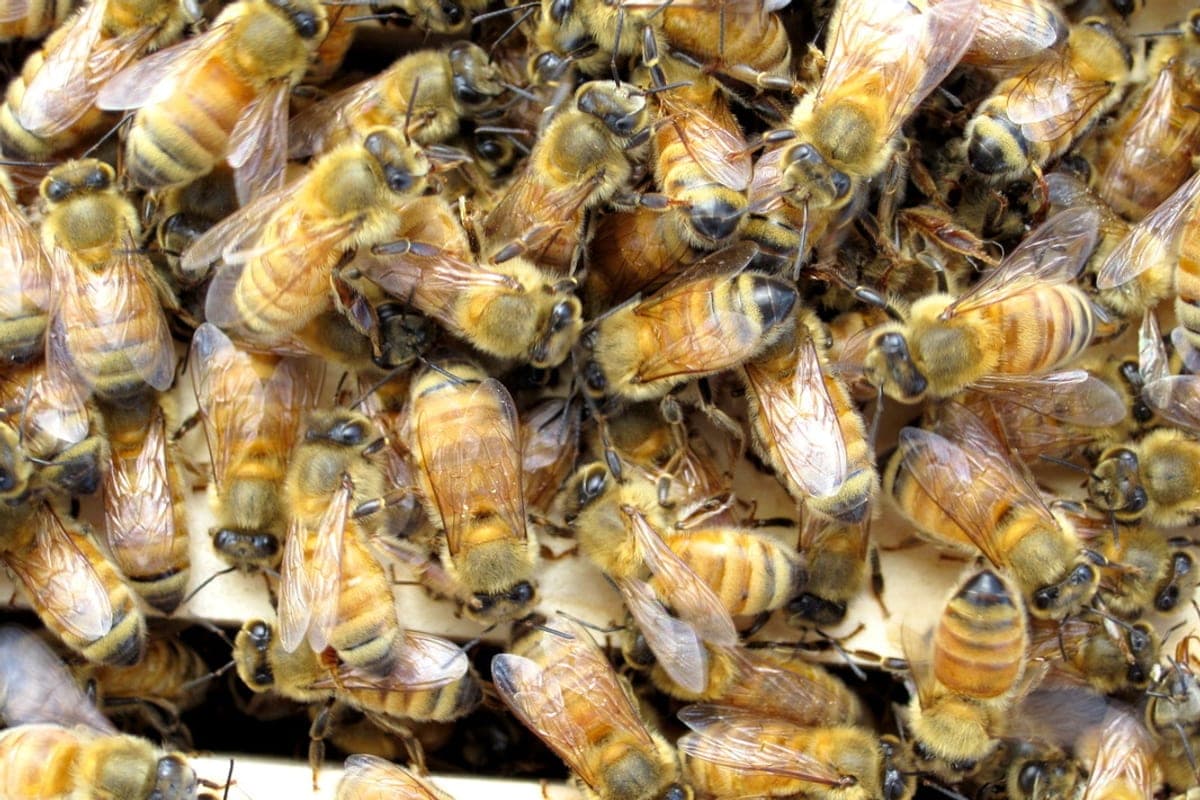
Bees on the comb, mid-season
Before you call
The things people ask first
What does “raw” actually mean on your label?
That the honey has not been heated above room temperature and has not been filtered — it is strained through mesh to take the wax out, and that is all. Commercial honey is usually warmed so it pours fast and filtered so it stays clear on a shelf, and both of those take out the pollen and flatten the flavour. Anyone who keeps bees will tell you “raw” and “natural” mean the same thing here, and they are only worth saying about honey in its purest form.
Where can I buy it?
Saturdays at the Mount Vernon Farmers Market on Main Street, 9:00 AM to 2:00 PM through the market season. Outside of that, call or message and we will arrange a pickup in Mount Vernon. There is no shop — this is an apiary, and the honey is sold where it is made.
Do you ship?
Ask. The 16 oz jars are glass and glass does not enjoy the post, so pickup and the market stall are the reliable routes. Call or email and we will tell you straight away whether what you want can be sent.
My jar has gone solid and grainy. Has it gone off?
No — it has crystallised, and it is a sign of the right thing rather than the wrong one. Raw, unfiltered honey sets sooner than the heat-treated kind precisely because the pollen and sugars are still in it. Stand the jar in warm water and it will come back. Do not boil it, and do not microwave it, or you undo the part you paid for.
Why does the wildflower taste different from last time?
Because the flowers were different. Wildflower honey is whatever was blooming within range of the hives that month, so weather and season move it about — richer and darker some months, lighter others. It is the same reason no two years are identical. If you want one flavour reliably, the blackberry and the maple flower are the steadier ones.
There is a swarm of bees in my tree. What do I do?
Please do not spray them. A swarm is a colony between houses; they have no comb and no honey to defend and they are about as gentle as bees get. Call (360) 708-9424 and Brad will come out and capture them by hand, at no charge, anywhere in Skagit County — and they will go on to a hive here in the county rather than into a bin.
Do you use chemicals or antibiotics in the hives?
No. Nothing goes into these hives that could harm the bees or the environment they are foraging in — no miticides, no antibiotics, no feed-through chemicals. It is the slower way to keep bees and it is the reason the honey is worth putting a name on.
The Skagit River Valley.
Twenty-six colonies on seven properties between the Skagit and the Samish, and one table on Main Street on a Saturday morning. If you want honey, or you have a swarm in the garden, the same number reaches Brad either way.
Call or email BradGet in touch
Ask about the honey, or about a swarm
The phone and the email both reach Brad. There is no office, no staff and no answering service — if he is in a bee suit he will call you back. If it is a swarm, ring rather than email: they move on within a day or two, and once they are gone they are gone.
Opening hours
- Saturday · Farmers Market
- 9:00 AM – 2:00 PM
- Sunday – Friday
- Pickup by arrangement — call first